Tag Archives: digital strategy

Personally I think its Personalisation!

Personalisation

I was recently invited to speak at one of the Innovation Enterprise summits in London (IE run some excellent global events that attract CxO level attendees from a spectrum of businesses areas). Although this event was focused primarily on content, I was giving the final talk of the day and chose to concentrate on personalisation.

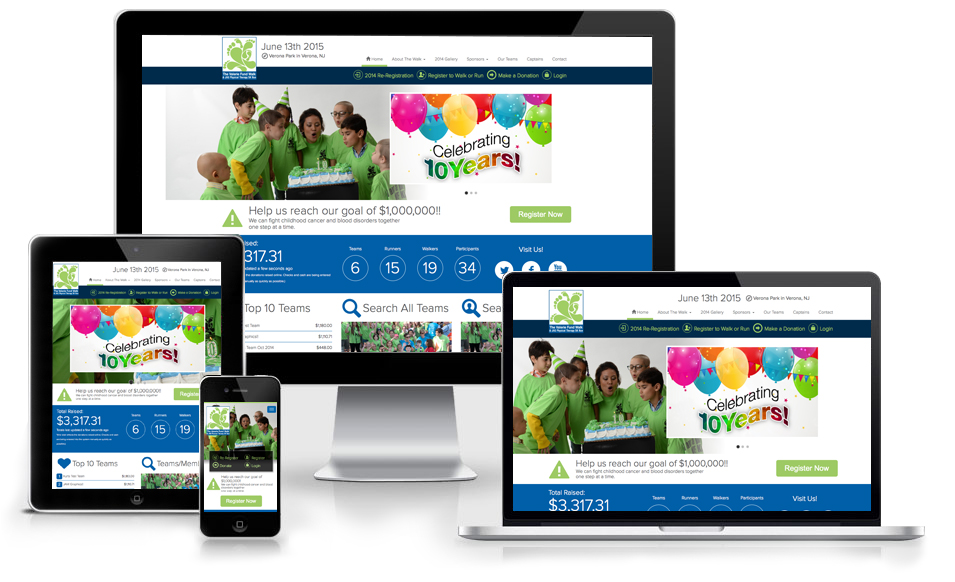
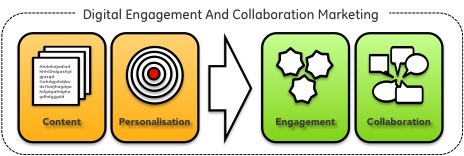
I opened with the above diagram and although all the images relate to recent experiences of mine, they all ultimately describe the need to know me as a person, and the importance of delivering a digital engagement that is targeted to me…that is me! Not a persona or machine generated impression of me, but me!

Why does this matter? In my opinion because I believe this is key to the digital future of all companies. We know of the generic user journeys we’ve no doubt all mapped, and the personas we’ve all created. But they are still very generic.

Marketing Week - Reaching e-commerce consumers in the 12-minute window

Marketing Week – Reaching e-commerce consumers in the 12-minute window

With ever shortening attention spans and social channels becoming clogged with information, ads or updates, getting the message across is becoming increasingly harder.

However, something targeted to me in my favourite colour (seriously) or on my preferred channel, or more importantly that knows where I am in the purchase journey and targets the information I need at this stage, will get me interested and engaged. The rest drop in to my conscious but dis-engaged delete marathon that I run almost daily on my spam email address (you know the one you use to register for white papers and so on).

In summary to get ahead you first need to get to know!


5 Key Inhibitors To Delivering Your Digital Strategy

implementation


I find I often think, talk and blog about the speed of execution of digital strategies! Maybe because not many people understand this basic formula:

Faster Implementation = Quicker Realised Benefit

The sooner you deliver your strategy, the sooner your customers will reap the benefits and value of it. It sounds obvious, but if it is, why do so many companies fail to deliver?

I have some theories and below are some of the things to watch out for…and happy to hear of others you’ve heard of.

  1. Waiting for perfection! I used to be guilty of this a few years ago. Not anymore though. Get comfortable with the 20/80 rule! i.e. going live with 20% of what you want to deliver is OK. Just have a plan to quickly and iteratively deliver the remaining 80%.
  2. Delivering in a matrix. Often I hear that if one party isn’t comfortable with the direction, the whole project stops. Solution is don’t tell anyone you’re doing it. Keep your focus small and under the radar. Success is impossible to argue against.
  3. The boss! Sometimes the bosses view has the greatest weight but matters the least! Move from direction to opinion and once you’ve done that, help them understand their opinion has less weight than that of the customers. Hey, I didn’t say this was easy!
  4. Analysis paralysis. Cant make a decision because you don’t have all the answers to all the questions you have? Each question opens up another 3 questions? Just stop. Whatever data you have is no where near as good as you’re going to have once your strategy is live.
  5. Competition! Watching the competition, wondering what their next step is, trying to plan to do what they’re doing but better is a sure fire way to delivering nothing. Take the guess work out and just do something. That will be the springboard to enable you to beat the competition.

If you have any other inhibitors, drop me a line and I’ll update the post with your name and entry.

Which digital channel is right for me? #toomanychannels

Sometime back, before I had created the digital strategy for my business and started its digital transformation journey, this question perplexed me. And I mean, really perplexed me! Which are the right digital channels to engage with? confused

Which, of all the digital channels should I use? Which one will guarantee me success? Facebook is on the wane should I therefore ignore it? LinkedIn is for business will I alienate people if I use it. What does a B2B need v a B2C? Is Twitter of any value…and so on.

Of course, the answer is all of them! They are all relevant and important channels to ensure the successful implementation of your digital strategy and transformation. So don’t waste too much time deliberating which one matters to you, but instead think about which one(s) you might want to start with.

To help with this, some considerations you may want to take into account

  1. Do you have a strong web site, mobile friendly, engaging etc.? Ultimately you’re going to want all move your customers to an action, and this will be either interacting with content or hopefully buying something. And that is likely to be on your website. So if your tweets or blogs are awesome, but your website is as engaging as a magnolia painted brick, you’re going to have problems. Sort out your website first!
    website
  2. What country are your audience in, and how does your target audience in these countries leverage and engage with the various digital channels today? This is a key consideration. Brasil for example are big on Social Media for B2C and B2B engagement. China have Weibo and don’t allow Youtube etc. So if Brazil is your target country and you were planning on using LinkedIn, you’re strategy may fail purely based on using the wrong channel. Identify your audience, where they are and what they use today.Digital snapshot
  3. What kind of content do you have/can you generate and how frequently? In this sound-bite consumption world, not all hooks catch a fish. So having frequent and different content types across the channels maximizes your chance of catching a prospective customer. Develop a content strategy, keep it simple and build in a resource plan to keep it current!(image source: http://www.garyhyman.com)contentwritingblog
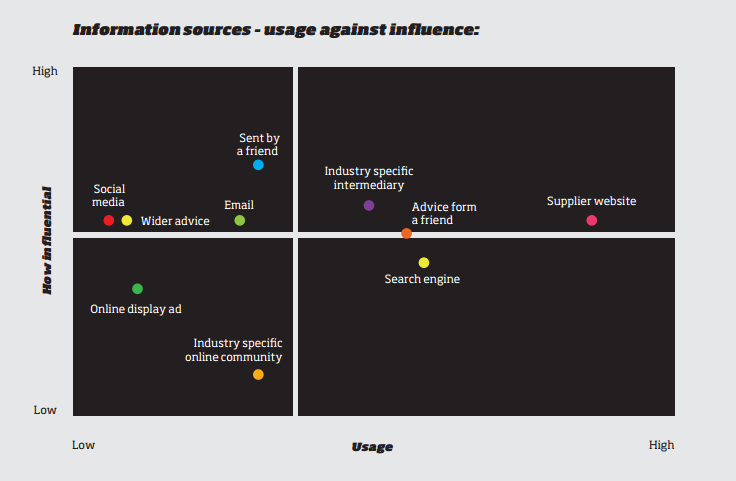
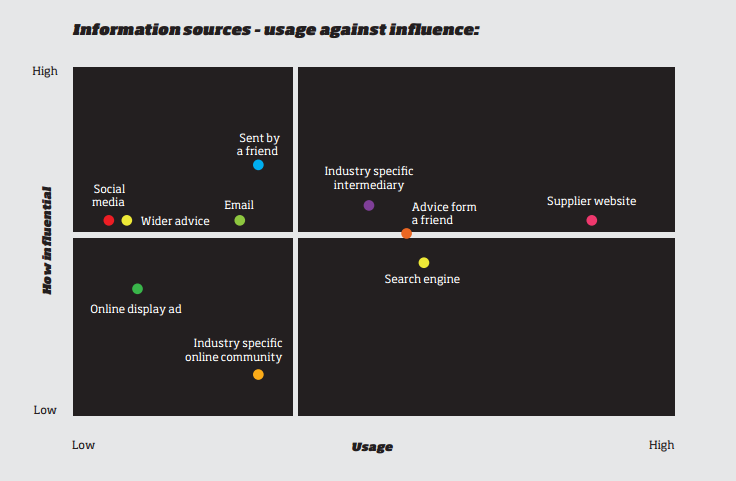
  4. Can you rank the digital channels by probabilities of successful engagement? Roll out your strategy on 1-2 channels first, gauge the customer engagement, and the commitment from your side to keep the content flowing, and then add in others as your experience and ability mature. My suggestion would be not to start with your highest ranked probability of success, but to start light and less obviously  (image source: http://www.smartinsights.com)Buyersphereb2breport2015influencevsusage
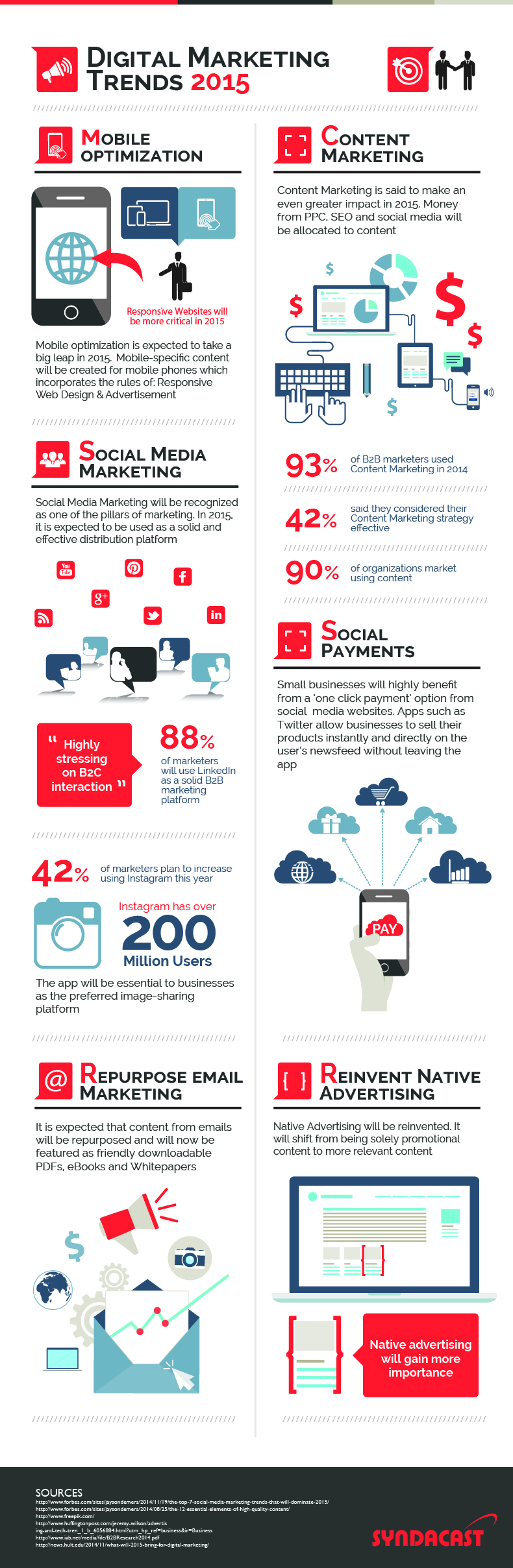
  5. Finally, are you aware of current and future trends? We have some very established social channels now, but new ones appear almost daily and you need to either corner the market on them for your brand immediately or keep close tabs to see how/if they blossom. Either way, you should have a cookie cutter approach to adopting new digital channels, such that you can swiftly execute an adoption plan.

2015-digital-marketing-trends--what-opportunities-lie-ahead_54978e613f9cd

I hope you found this of some use.

Catch you all soon.


4 Key steps to start you on your Digital Transformation Journey


So welcome to 2015 and my first post of the year!

One of my goals for my posts this year is to relay my experience of delivering a digital business transformation in the hope that it helps, supports, proves or disproves your own thoughts and ideas on delivering your own digital transformation

digitaltrans


The first question to answer is how do you get started? The old school approach has been to spend a significant amount of time (and money) understanding where you are now and where you need to be. This tends to involve many weeks and months of capability audits, skill assessments, workshops, roadmaps etc. Often resulting in many 100+ page Powerpoint documents with some beautiful imagery and graphs, and 1 page executive summaries.

Personally I’ve found this to be of no use. Who knows where you should be? Competitors? Consultancies? Frankly I don’t know how anyone can clearly define where you should be, other than yourself. The digital channels and engagement desires of your customers are evolving continuously. Businesses (including your competitors) are trying different things continuously in a vain attempt to deliver the promised goal of many a transformation.

The Modern Digital Transformation Path


For me Digital Transformation is really a number of smaller measurable projects, delivered at speed and iteratively. This is not just to ensure you quickly provide value to your customers, but also because the digital arena is adapting and evolving so quickly, the sooner you’re in the game, the better!

So the 4 key steps to take to start your transformation are:

  1. Focus your transformation not on how your business is organised or desires to be portrayed externally, but on your customer. Read about the business your customers are in, spend a little time talking to them. Be wary though, they also don’t know what they want and can steer you completely in the wrong direction, but they will be able to clearly identify for you where the opportunities lie! From this you’ll probably get a bit of a gut feel for the area your transformation needs to focus on.
  2. Don’t even think about trying to transform the whole business. You will fail. Don’t even try a whole function. Instead define a small measurable goal to kick off your transformation. Avoid a company wide one e.g. growth in a country by x, or y new customers. You want something small such that you can identify the external factors that may influence your success in achieving that goal. I would make every attempt to keep the audience of this small, the board I have found are best kept at a distance at this stage. You’ll need them later!
  3. Engage with a small consultancy to brainstorm how you can deliver that goal. What digital tools / channels do you THINK will help. Until you try no one knows for sure, so this is a leap of faith. What the agency will be able to do for you is provide you a semblance of probability of success based on their experience. try to ensure your transformation project touches a number of digital technologies and or channels. For example include a website, blogs and an app in your first project.
  4. Finally develop your project plan, Ensure you can deliver the majority of the activities in 12 weeks! I know that sounds aggressive, but it can be done so long as you keep everyone focused on the fact that this is an iterative deployment and perfection is not required out of the gate.

So that’s how I got started. Happy to hear any views on what you’ve tried, but in case you haven’t started yet…get to it! Time waits for no-one!

Announcing THE 2015 B2B Marketing prediction!

DEACM

I love this time of year, along with the parties, presents, general cheer and happiness there is also the liberal giving of opinions, thoughts, guesstimations and general predictions for the forthcoming year, and marketing, like many other disciplines, participates in this with gusto.

So without wanting to feel left-out or robbing the general public of my own crystal ball like vision, I’ve decided to post a short article on what I sincerely believe is the future of B2B marketing certainly for 2015 and probably into 2016.

We’ve had over the last few years social media, mobile and content marketing, outbound to inbound, SEO and SEM to name but a few, as a focus for marketing departments, and with this have seen a general maturing of both companies and customers in the use and expectations of the various digital marketing platforms.

What I now see as departments and people ripen in their grasp of digital marketing, is an inevitable and logical move to Digital Engagement And Collaboration Marketing (DEACM) in 2015. As companies come to terms with content marketing and understand that long-winded highly technical documents tend to only be appreciated by the author, or that ‘matey’ banter only works at your local watering hole and very rarely on-line in a B2B, there will be a general acceptance that the purpose of good content is to engage your target audience, and that your target audience is expecting good content. Once engaged though, what happens next?

The B2C generalised expectation is that you will by the item you came to the site for, However in a B2B, that is often not the case. With longer cycle purchase journeys and products that can be too costly to purchase online, there is a need to build on the engaged content, to maintain the relationship with the customer. This is the key value of DEACM…Collaboration! I believe we will see probably toward the end of 2015 a drive to encourage customers to collaborate around the content, discuss it’s merits, share examples, challenge and even disagree. I believe the openness of companies to encourage candid discussions and feedback, suggestions and comments will significantly and positively impact growth as customers move from sceptics to loyal brand ambassadors. A transition built on the development of trust between vendor and customer, and built from great content that encourages engagement and collaboration.

I suspect this doesn’t sound like rocket science to anyone, and it isn’t. However, in the B2B space, a segment that significantly lags behind its B2C sibling, it is. It has been a forced march for digital marketing in B2B’s over the last 18 months, with very steep learning curves. This has had pro’s and con’s, the cons – B2B’s are not delivering digital engagements their customers expect, the pros – they can take advantage of all the good work other digital marketing teams have done and learn how to adapt them for what is a very different and sceptical user community, that of the business buyer.

This is something I strongly believe in and will provide an update to this article in April as I deliver on this exact topic.

That’s enough from my crystal ball gazing, I want to take this opportunity to wish you all a wonderful Christmas /Holiday break and a Happy New Year.

Crystal-Ball

DEACM, you heard it here first!


It’s not what you think, but what ‘they’ think!

I recently stumbled across a great McKinsey report from 2013 that highlighted what top global B2B companies stated as impactful to their brand theme versus what their customer felt contributed to brand strength. Below is an extract of one of the tables in the report.

Brand strength

You’ll notice in the table that there’s an interesting trend in both graphs, namely on the left column (what B2B’s think was important) is almost completely opposite to that on the right (what customers found contributed to brand strength)!

I’m not sure I’m surprised by this, but it is a reminder that the sometimes corporate over-arching direction and/or messages – “…we’re he market leader”, “…we operate globally…” although may satiate the appetite of the CEO’s of the customers, do little to convince the purchasing power in the customers organisations the value of that vendor. However, engaging candidly and with transparency, delivering on time and having domain expertise does significantly contribute to brand engagement and probably (not stated) loyalty!

It’s a reminder that we all have opinions and views that play heavily on the definition and execution of our strategies, but the need to sense check what we think they want is actually what ‘they‘ want.

Your opinion is irrelevant! (Or living in an adaptable digital age)

Opinions

Ok, that’s a pretty strong title, and this article may be a tad provocative. However, although not being a career marketer, it consistently surprises me at how slow to change, adopt and acclimatise to new approaches, different styles or bold brand changes marketing organisations are! I find it astonishing that many of my peers across industry have failed to adapt their marketing style for the digital age! Again I’m talking primarily B2B (although I’m sure this runs across all industries!).

I often find myself in discussions and debates about the look and feel of a website, the colour of logo or promo page or the text and font of an article. Why? In this highly technical world, we can change pretty much everything in a matter of moments (IT permitting!) “You don’t like the font, no problem let’s make it ‘Krungthep’ then”, “the image is wrong ok, we’ve changed it.”

It’s my belief this procrastination on appearance, look & feel etc. harps back to the days of print media. Remember those days, where once its in the post it’s too late for changes. You’ve printed your 10,000 brochures and are still not sure of the background colour, tough!

In this modern digital world, and with the digital tools that jangle around in it, adaptability is the key to success! Changes can be made on the fly or over a weekend if you prefer. Tests can be run to see exactly which colour or style or brand message etc. your audience prefers or engages with. We need to adopt the approach of TRY-TEST-REVISE and help our organisations move faster and provide greater connection with our customer base.

Now, lets extend this thought a little broader…what about the creation and execution of the digital strategy itself? Maybe a topic for next time.

It’s all about the numbers!

Or is it?!

I’ve spent the last 3 months building a transformative digital strategy for my business. Spending the early weeks reviewing articles from the big consultancies jumping to the graphs that say ‘A’ is better than ‘B’, conceiving, executing and analysing my own customer surveys looking for what the customer is doing and where, reviewing articles and info-graphics on ROI’s, KPI’s, and other metrics interrogating the information for insight and relevance, and so on

Having assimilated as much of this information as I possibly could, I discarded the majority of it! There was certainly a lot of data, numbers, reports, surveys, dashboards etc. but what became apparent very quickly was, there is almost no data or benchmarks that can be applied to either what I’m thinking of doing, or even the use of digital in my space! In fact a lot of the data I reviewed could if taken at face value have led to the production of a very myopic strategy, based on what is done today and the prejudices of those that have been in this industry for many many years.

The reason I bring this up is simply because senior leaders and executives often look for data to prove the potential of something. How quickly will I see a change? How quickly will I get my return on investment? How many sales will this lead to? Etc. However in the case of a digital strategy, it’s a theory! Although there may be data that helps support part of a strategy, a strategy in itself should be a unique, untested concept that will be proven out over a period of time. ROI’s, Sales or other KPI’s can be proposed but frankly they’re guesstimates.

So I started to wonder how many truly innovative digital strategies, concepts or ideas have been prematurely killed by the fear of not having a clear line of sight to a metric, or because a guesstimate was inaccurate or datapoint was not achieved on time? I suspect quite a significant number.

How do you get around this, after all this is nothing new? Well I propose 2 things.

The first is for the management teams and is a difficult one, but frankly if you’ve hired a great digital leader or team really shouldn’t be, and that is TRUST! Trust in the leap of faith your employees are proposing. Leave the data blanket alone and just believe in your team.

The second is for those building the strategies and will help with the above point. Keep both the cost and time of execution as low as possible, but without undermining your digital strategy in a way that it impedes the potential success of it. Look for POC’s and Pilots, keep the first set of deliverables manageable, and iterate iterate iterate.

As for my digital strategy, fortunately I have a CEO, CMO and leadership team that don’t mind calculated risks and in fact support leaps of faith! Me, I’m executing on my strategy and I hope many more can convince their leaders and peers that in the digital world, all bets are off!

Does the tail wag the dog?

I’ve spent a number of years in industry, and in that time have been involved with a number of projects that revolved around asking the ‘customer’ what they need, only to find out once the project was delivered, that they didn’t use what they said they needed!

Now I’ve also seen numerous examples of where build it and they will come have also failed to deliver, maybe because not enough time was given to the change in habit to get people to adapt to the new ‘thing’ or, it just simply completely missed what the customer needs actually were.

So I now subscribe to the following approach to delivering new concepts:

  1. Trust – Don’t ask! Conceive the idea then sense check with people you respect and trust
  2. Flexibility – Choose a platform/approach that is flexible and adaptable
  3. Speed – Deliver the concept quickly. Go live with the minimum amount of content
  4. Iterate – Talk to a small group of your customers to direct further iterations
  5. Refresh – Flush the concept annually to ensure freshness to the approach