Are you a marketing epistemologist? You might want to be!

By 2020 customer experience will overtake price as the key brand differentiator. Forbes

Marketing as you all no doubt know, is defined in the Oxford dictionary is ‘The action or business of promoting and selling products or services, including market research and advertising.’

This is great up to a point! If recent research is to be believed we are exposed to somewhere between 300 and 3000 ads per day! Which prompts the question so how do we marketers get our brands into the brains of our target body of potential customers?

Epistemology is ‘The theory of knowledge especially with regards to its methods, validity,and scope, and the distinction between justified belief and opinion.’

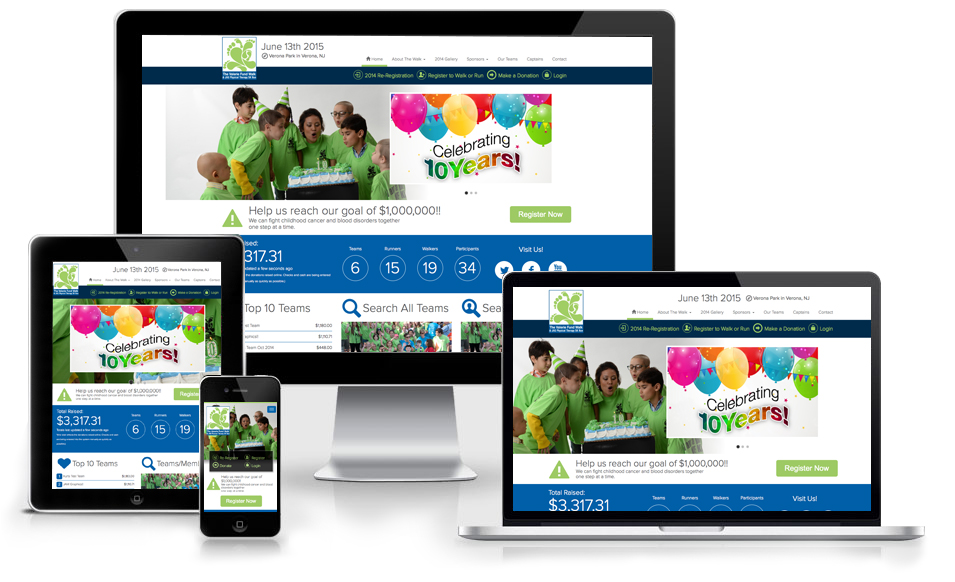
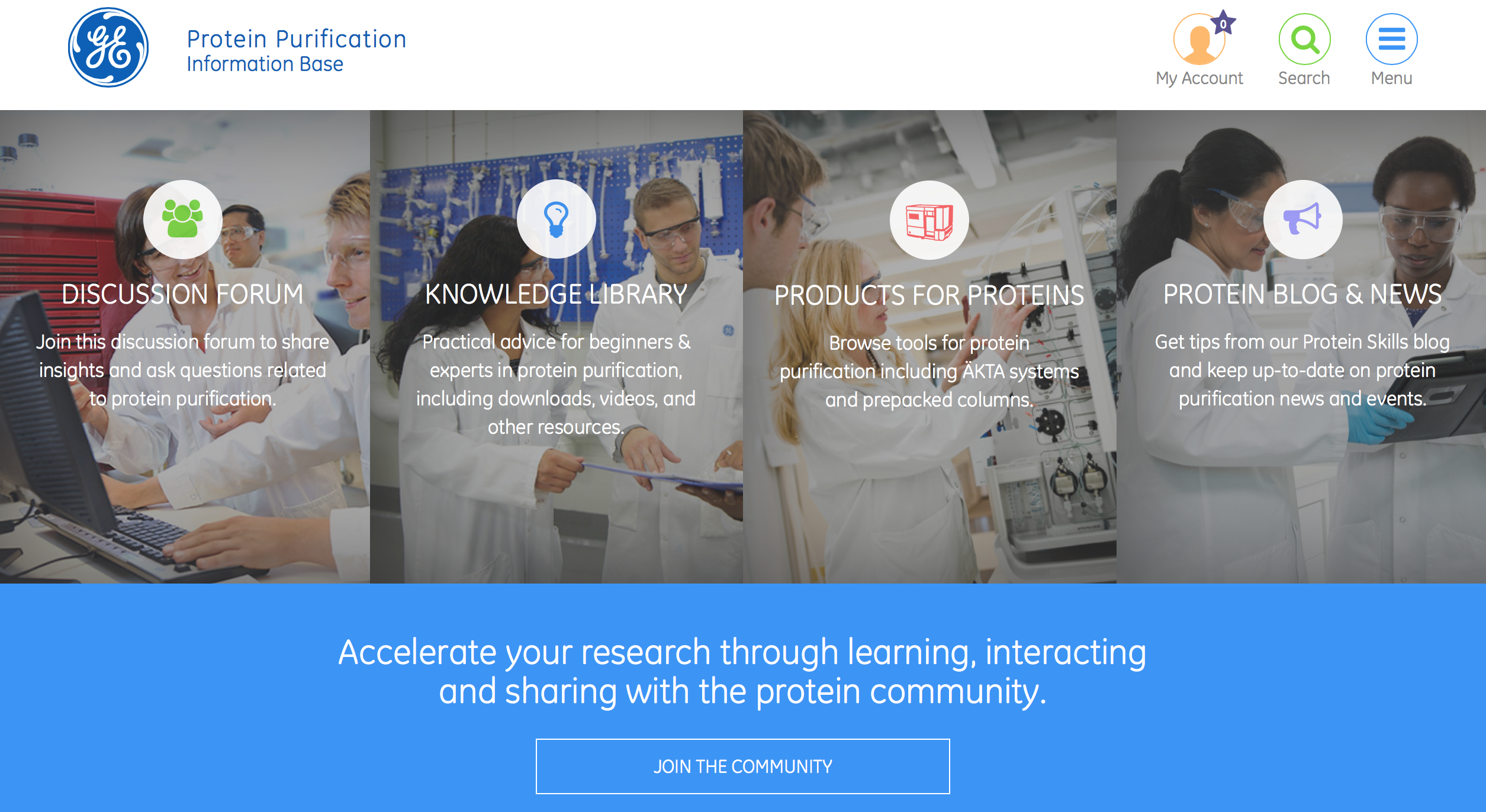
About 2 years ago I embarked on a digital strategy centred customer engagement and content. The opportunity for like-minded people to share ideas, knowledge and answer questions – Epistemology! The epicentre of the strategy was something I termed the Information Base, essentially a customer portal. The concept being that through supporting the target audience with help, information, thought leadership etc. we would develop a brand affinity that ‘old school marketing’ could only dream of. The result you can find here: http://proteins.gelifesciences.com
Screen Shot 2016-03-08 at 21.21.40

Built on Sitecore by the Reading Room this part of the strategy went from idea, to wireframe to development and production in around 8 months. Disruption was inherent in this from the start with Sitecore’s personalisation engine activated, login and self-selection preferences this is a first in not only the Life Science space, but most B2B’s.

Significantly aided by the unequivocal support of the CEO and Head of Product Development I look forward to seeing how this develops over the coming years.

Are you heading down the epistemology marketing path?

Check it out.

A


It is not Digital…but Organisational Disruption that matters

The organisational keys to the digital kingdom

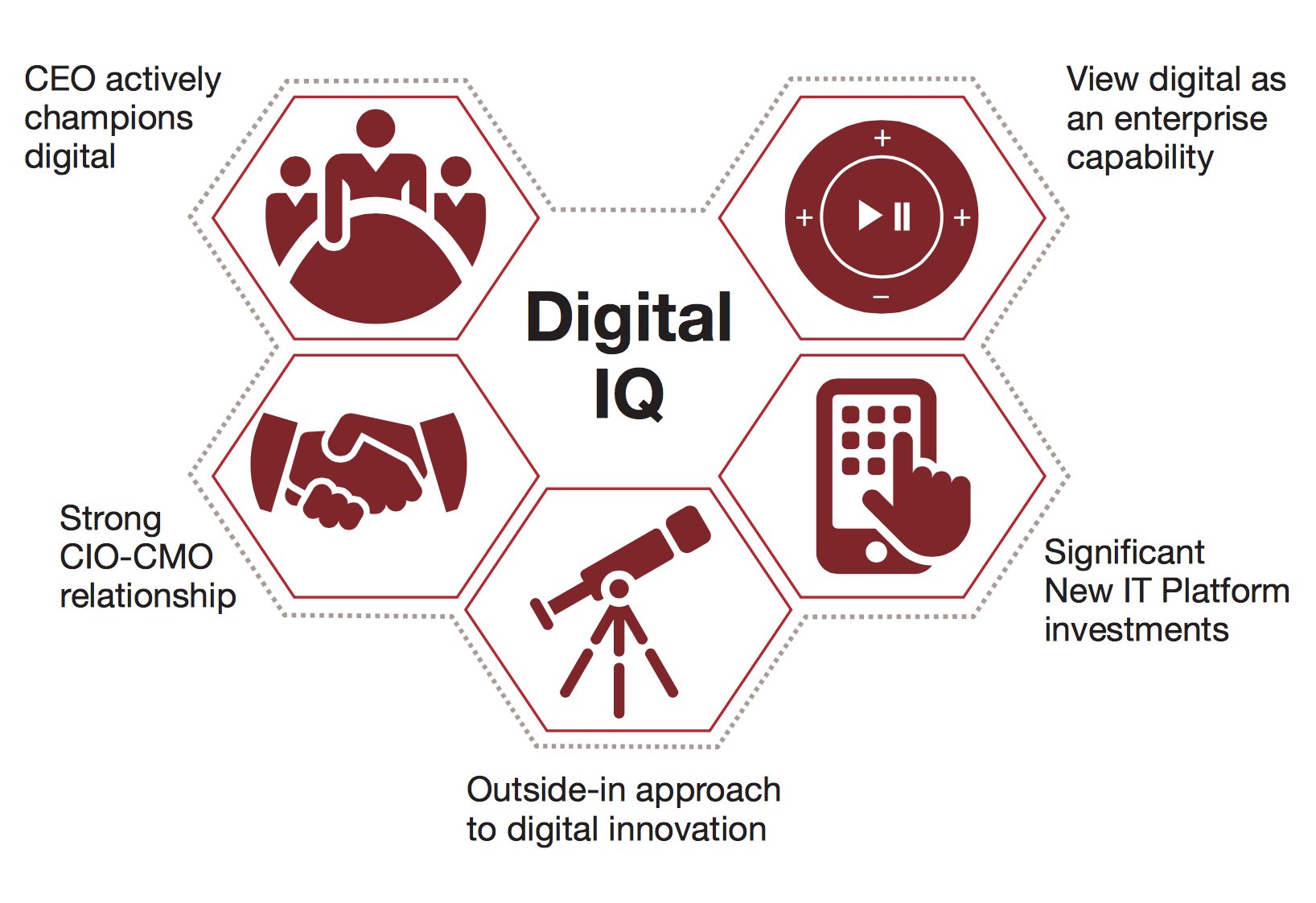
The organisational keys to the digital kingdom – PWC 2015

I’ve recently been consulting for a company that is keen to develop its digital capability. This is not a topic new to me, I’ve been lucky enough to lead digital transformations before, but what is surprising is the fact that I still hear, see and experience the same key challenge.

The reoccurring, but often ignored challenge is that the focus of the organisations is always on the channels and tools, and never on the organisational change required for a business to ‘be’ digital.

The above diagram (The five behaviors that accelerate value from digital investments – PWC 2015) nicely calls out the key competencies a company needs to display in order to ‘go digital’. Specifically there are two organisational ones that I believe are fundamental. First, CEO support. Although this does not guarantee success, it does get you a seat at the table, from which you can start to influence the organisation from within. What is not called out though is the need to drive a digital DNA throughout the company, and this comes from three activities:

  1. Re-structuring the organisation within the company to reflect the new way of working – customer first and digitally engaged
  2. Engaging the company in the change – and that is how it will be seen by the employees…Change, and ‘market’ the successes internally
  3. Ensuring some of the early key digital projects actually deliver value to the employees, i.e. initiatives focused on delivering internal productivity

The second fundamental behaviour is the outside-in approach to innovation. I see too many organisations doing the same thing and expecting a different result (see Einstein’s definition of insanity). Bringing in leadership from a different company (even the same industry) is key to accelerating the change. A perspective not constrained by seniority, familiarity, ignorance or ambivalence is absolutely critical as digital transformation requires people to take risk, be creative & innovative and challenge the status quo.

Starting with these two will significantly improve an organisations chances of achieving its digital ambitions.

@BlackBerry will rule the world!

As a CTO I get to look at a lot of tech but for me the @BlackBerry 10 OS on the #BlackBerryPassport is the most practical, useful and valuable piece of technology (non consumer focused) to come out in the mobile arena in the last 2 years, and that on its own can significantly contribute to both businesses productivity and security!

blackberry-passport-silver-edition-features-better-design-with-stainless-steel-frame-488649-5

Why? Well the user interface is intuitive, it summarises my social ecosystem for me in one window, I need to only use my thumb to navigate, the keyboard means a 1000% reduction in typos and I can seamlessly view/comment on Excel and Powerpoint files on the go…to name but a few! #BlackBerryBrilliance!

So if I’m right in my statement above, why hasn’t BlackBerry penetrated deeper in the business world? Why isn’t it back on top of the corporate tree where it used to be? In fact, why is it certain software / applications (and this extends even to consultancies and suppliers) are trumped by less usable ones even when they’ve proven to be more capable, practical and cost effective? I’m sure there are hundreds of reasons, but I put it down to three key things:

  1. Advice – Well, poor advice! This could be provided by a company or even a website. There are a lot of them out there that provide a lot of ‘expert’ advice on what to buy. However how many are truly un-biased? How many are involved in the delivery or are externally rated on the success of their advice? How many talk about their failures? In my 25 years of working in technology I’ve never seen a consulting entity of any size talk about the poor advice they’ve provided in the past and any lessons learned! Once provided it’s on to the next one!
  2. Ignorance – How many times do we sense check the advice we’re being given? Do our own leg work and reach out to our peers or the wider community to sense check our approach? With so much going on and often in the larger budget businesses, there really is little time to focus on ensuring the research is properly conducted. In the same vein its easier to select one of the larger implementation partners than do the ground work to find the right cultural  fit for the company.
  3. Ego – Usually akin to that age old tale of the Emperors new clothes. If a senior leader has selected or sponsored a software product, implemented it somewhere else, or knows of a competitor doing the same thing, who’s brave enough to tell them it’s not fit for us? The employee with 30 years of tenure? The newbie? The career driven go-getter? The vendor/implementor? In my experience everyone decide it’s not a battle worth fighting and watches with a degree of silent embarrassment good money being thrown on bad as the project devours the pennies and pounds, the careers and conscience.

If we can avoid the above, use our community more, leverage small niche consultancies, look at the practicality and not popularity of the solution and be humble and open to the input of our teams, maybe we will see the likes of Blackberry or if you prefer the most sensible software, applications and products take their rightful place.

It’s too late to change!

  
I found this membership card whilst sorting through a box of ‘stuff’ the other day, and it reminded me of the very real risk of failing to recognise, internalise and act on change.

For the international community a brief background…Blockbuster was THE video rental store during the 90’s in the UK that failed to adequately address the challenge of online video rental, download and viewing. It went bust.

I’m astonished that still with such obvious reminders of the risks of ignoring the bigger picture, and by that I mean shifts in technology, customer adoption/consumption etc., companies and businesses are still failing to adopt and adapt to change.

I’ve been thinking on this for a while and have surmised that apart from the obvious it’s a people thing, it is almost uniquely a senior management issue. Their fear of failure/ ego/lack of understanding/or plain arrogance is likely to at best result in losing ground to competitors, at worst strangle the business.

For these people I’d argue it’s too late for them to change. They need to either recruit and then trust someone with the skills to take the business forward and compete in the digital space, or resign and allow the business to find a 21st century leader prepared to run the company.

Personally I think its Personalisation!

Personalisation

I was recently invited to speak at one of the Innovation Enterprise summits in London (IE run some excellent global events that attract CxO level attendees from a spectrum of businesses areas). Although this event was focused primarily on content, I was giving the final talk of the day and chose to concentrate on personalisation.

I opened with the above diagram and although all the images relate to recent experiences of mine, they all ultimately describe the need to know me as a person, and the importance of delivering a digital engagement that is targeted to me…that is me! Not a persona or machine generated impression of me, but me!

Why does this matter? In my opinion because I believe this is key to the digital future of all companies. We know of the generic user journeys we’ve no doubt all mapped, and the personas we’ve all created. But they are still very generic.

Marketing Week - Reaching e-commerce consumers in the 12-minute window

Marketing Week – Reaching e-commerce consumers in the 12-minute window

With ever shortening attention spans and social channels becoming clogged with information, ads or updates, getting the message across is becoming increasingly harder.

However, something targeted to me in my favourite colour (seriously) or on my preferred channel, or more importantly that knows where I am in the purchase journey and targets the information I need at this stage, will get me interested and engaged. The rest drop in to my conscious but dis-engaged delete marathon that I run almost daily on my spam email address (you know the one you use to register for white papers and so on).

In summary to get ahead you first need to get to know!


5 Key Inhibitors To Delivering Your Digital Strategy

implementation


I find I often think, talk and blog about the speed of execution of digital strategies! Maybe because not many people understand this basic formula:

Faster Implementation = Quicker Realised Benefit

The sooner you deliver your strategy, the sooner your customers will reap the benefits and value of it. It sounds obvious, but if it is, why do so many companies fail to deliver?

I have some theories and below are some of the things to watch out for…and happy to hear of others you’ve heard of.

  1. Waiting for perfection! I used to be guilty of this a few years ago. Not anymore though. Get comfortable with the 20/80 rule! i.e. going live with 20% of what you want to deliver is OK. Just have a plan to quickly and iteratively deliver the remaining 80%.
  2. Delivering in a matrix. Often I hear that if one party isn’t comfortable with the direction, the whole project stops. Solution is don’t tell anyone you’re doing it. Keep your focus small and under the radar. Success is impossible to argue against.
  3. The boss! Sometimes the bosses view has the greatest weight but matters the least! Move from direction to opinion and once you’ve done that, help them understand their opinion has less weight than that of the customers. Hey, I didn’t say this was easy!
  4. Analysis paralysis. Cant make a decision because you don’t have all the answers to all the questions you have? Each question opens up another 3 questions? Just stop. Whatever data you have is no where near as good as you’re going to have once your strategy is live.
  5. Competition! Watching the competition, wondering what their next step is, trying to plan to do what they’re doing but better is a sure fire way to delivering nothing. Take the guess work out and just do something. That will be the springboard to enable you to beat the competition.

If you have any other inhibitors, drop me a line and I’ll update the post with your name and entry.

Which digital channel is right for me? #toomanychannels

Sometime back, before I had created the digital strategy for my business and started its digital transformation journey, this question perplexed me. And I mean, really perplexed me! Which are the right digital channels to engage with? confused

Which, of all the digital channels should I use? Which one will guarantee me success? Facebook is on the wane should I therefore ignore it? LinkedIn is for business will I alienate people if I use it. What does a B2B need v a B2C? Is Twitter of any value…and so on.

Of course, the answer is all of them! They are all relevant and important channels to ensure the successful implementation of your digital strategy and transformation. So don’t waste too much time deliberating which one matters to you, but instead think about which one(s) you might want to start with.

To help with this, some considerations you may want to take into account

  1. Do you have a strong web site, mobile friendly, engaging etc.? Ultimately you’re going to want all move your customers to an action, and this will be either interacting with content or hopefully buying something. And that is likely to be on your website. So if your tweets or blogs are awesome, but your website is as engaging as a magnolia painted brick, you’re going to have problems. Sort out your website first!
    website
  2. What country are your audience in, and how does your target audience in these countries leverage and engage with the various digital channels today? This is a key consideration. Brasil for example are big on Social Media for B2C and B2B engagement. China have Weibo and don’t allow Youtube etc. So if Brazil is your target country and you were planning on using LinkedIn, you’re strategy may fail purely based on using the wrong channel. Identify your audience, where they are and what they use today.Digital snapshot
  3. What kind of content do you have/can you generate and how frequently? In this sound-bite consumption world, not all hooks catch a fish. So having frequent and different content types across the channels maximizes your chance of catching a prospective customer. Develop a content strategy, keep it simple and build in a resource plan to keep it current!(image source: http://www.garyhyman.com)contentwritingblog
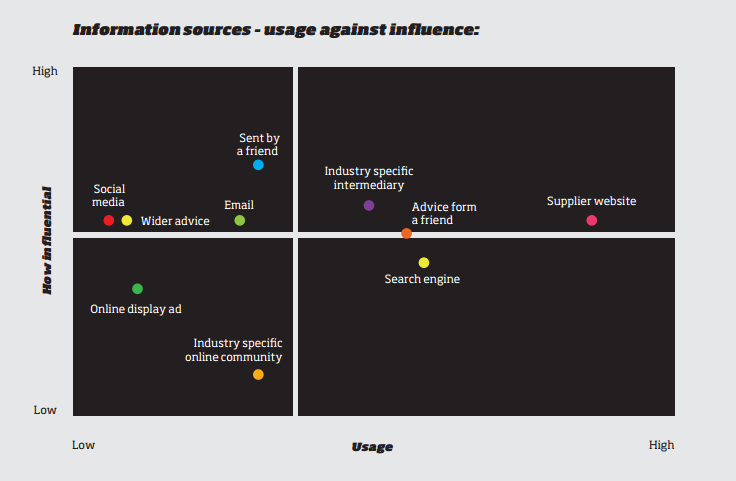
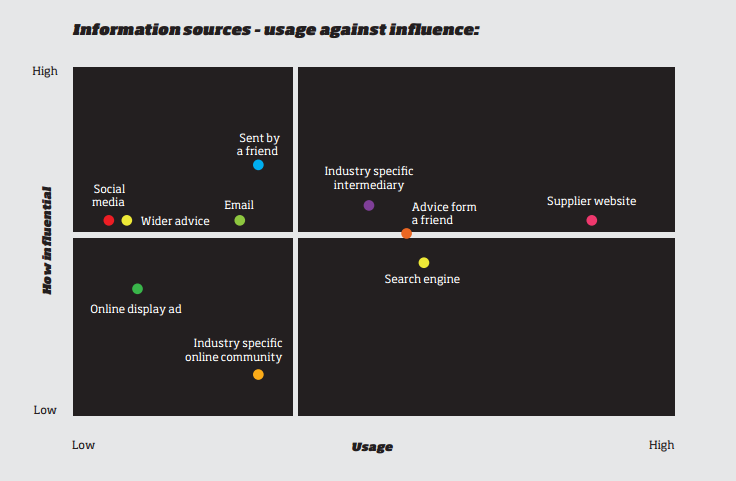
  4. Can you rank the digital channels by probabilities of successful engagement? Roll out your strategy on 1-2 channels first, gauge the customer engagement, and the commitment from your side to keep the content flowing, and then add in others as your experience and ability mature. My suggestion would be not to start with your highest ranked probability of success, but to start light and less obviously  (image source: http://www.smartinsights.com)Buyersphereb2breport2015influencevsusage
  5. Finally, are you aware of current and future trends? We have some very established social channels now, but new ones appear almost daily and you need to either corner the market on them for your brand immediately or keep close tabs to see how/if they blossom. Either way, you should have a cookie cutter approach to adopting new digital channels, such that you can swiftly execute an adoption plan.

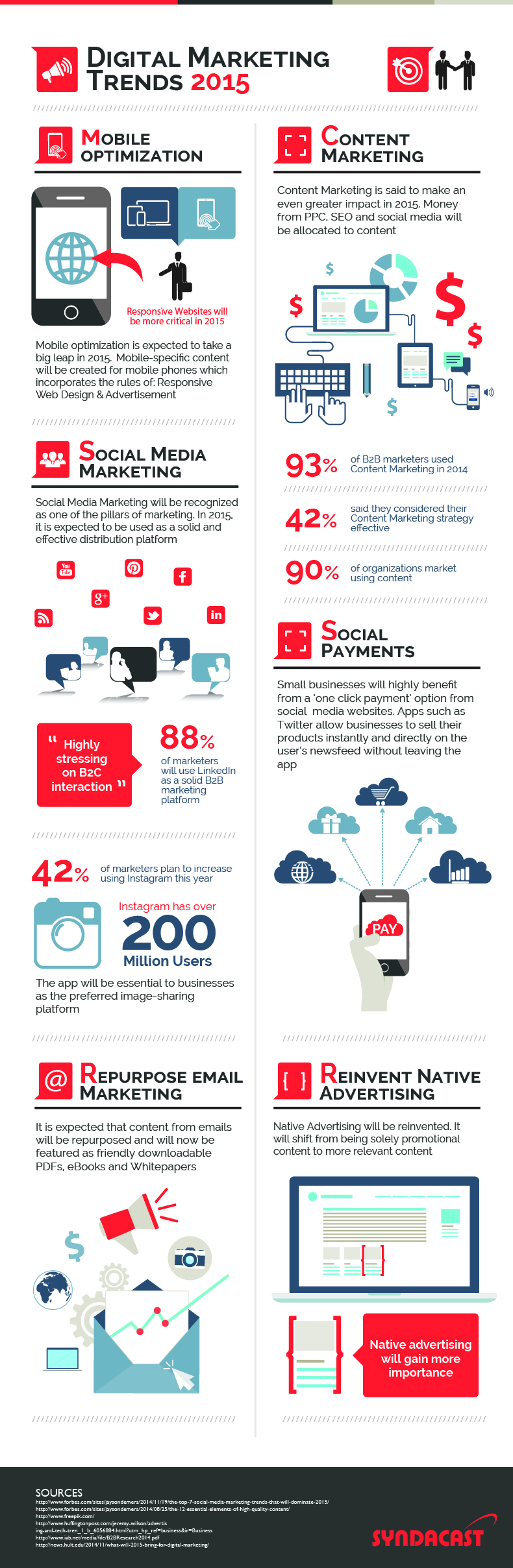
2015-digital-marketing-trends--what-opportunities-lie-ahead_54978e613f9cd

I hope you found this of some use.

Catch you all soon.


4 Key steps to start you on your Digital Transformation Journey


So welcome to 2015 and my first post of the year!

One of my goals for my posts this year is to relay my experience of delivering a digital business transformation in the hope that it helps, supports, proves or disproves your own thoughts and ideas on delivering your own digital transformation

digitaltrans


The first question to answer is how do you get started? The old school approach has been to spend a significant amount of time (and money) understanding where you are now and where you need to be. This tends to involve many weeks and months of capability audits, skill assessments, workshops, roadmaps etc. Often resulting in many 100+ page Powerpoint documents with some beautiful imagery and graphs, and 1 page executive summaries.

Personally I’ve found this to be of no use. Who knows where you should be? Competitors? Consultancies? Frankly I don’t know how anyone can clearly define where you should be, other than yourself. The digital channels and engagement desires of your customers are evolving continuously. Businesses (including your competitors) are trying different things continuously in a vain attempt to deliver the promised goal of many a transformation.

The Modern Digital Transformation Path


For me Digital Transformation is really a number of smaller measurable projects, delivered at speed and iteratively. This is not just to ensure you quickly provide value to your customers, but also because the digital arena is adapting and evolving so quickly, the sooner you’re in the game, the better!

So the 4 key steps to take to start your transformation are:

  1. Focus your transformation not on how your business is organised or desires to be portrayed externally, but on your customer. Read about the business your customers are in, spend a little time talking to them. Be wary though, they also don’t know what they want and can steer you completely in the wrong direction, but they will be able to clearly identify for you where the opportunities lie! From this you’ll probably get a bit of a gut feel for the area your transformation needs to focus on.
  2. Don’t even think about trying to transform the whole business. You will fail. Don’t even try a whole function. Instead define a small measurable goal to kick off your transformation. Avoid a company wide one e.g. growth in a country by x, or y new customers. You want something small such that you can identify the external factors that may influence your success in achieving that goal. I would make every attempt to keep the audience of this small, the board I have found are best kept at a distance at this stage. You’ll need them later!
  3. Engage with a small consultancy to brainstorm how you can deliver that goal. What digital tools / channels do you THINK will help. Until you try no one knows for sure, so this is a leap of faith. What the agency will be able to do for you is provide you a semblance of probability of success based on their experience. try to ensure your transformation project touches a number of digital technologies and or channels. For example include a website, blogs and an app in your first project.
  4. Finally develop your project plan, Ensure you can deliver the majority of the activities in 12 weeks! I know that sounds aggressive, but it can be done so long as you keep everyone focused on the fact that this is an iterative deployment and perfection is not required out of the gate.

So that’s how I got started. Happy to hear any views on what you’ve tried, but in case you haven’t started yet…get to it! Time waits for no-one!

Announcing THE 2015 B2B Marketing prediction!

DEACM

I love this time of year, along with the parties, presents, general cheer and happiness there is also the liberal giving of opinions, thoughts, guesstimations and general predictions for the forthcoming year, and marketing, like many other disciplines, participates in this with gusto.

So without wanting to feel left-out or robbing the general public of my own crystal ball like vision, I’ve decided to post a short article on what I sincerely believe is the future of B2B marketing certainly for 2015 and probably into 2016.

We’ve had over the last few years social media, mobile and content marketing, outbound to inbound, SEO and SEM to name but a few, as a focus for marketing departments, and with this have seen a general maturing of both companies and customers in the use and expectations of the various digital marketing platforms.

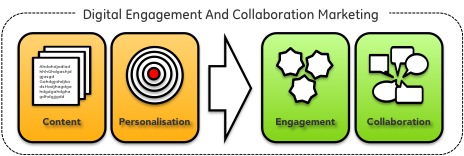
What I now see as departments and people ripen in their grasp of digital marketing, is an inevitable and logical move to Digital Engagement And Collaboration Marketing (DEACM) in 2015. As companies come to terms with content marketing and understand that long-winded highly technical documents tend to only be appreciated by the author, or that ‘matey’ banter only works at your local watering hole and very rarely on-line in a B2B, there will be a general acceptance that the purpose of good content is to engage your target audience, and that your target audience is expecting good content. Once engaged though, what happens next?

The B2C generalised expectation is that you will by the item you came to the site for, However in a B2B, that is often not the case. With longer cycle purchase journeys and products that can be too costly to purchase online, there is a need to build on the engaged content, to maintain the relationship with the customer. This is the key value of DEACM…Collaboration! I believe we will see probably toward the end of 2015 a drive to encourage customers to collaborate around the content, discuss it’s merits, share examples, challenge and even disagree. I believe the openness of companies to encourage candid discussions and feedback, suggestions and comments will significantly and positively impact growth as customers move from sceptics to loyal brand ambassadors. A transition built on the development of trust between vendor and customer, and built from great content that encourages engagement and collaboration.

I suspect this doesn’t sound like rocket science to anyone, and it isn’t. However, in the B2B space, a segment that significantly lags behind its B2C sibling, it is. It has been a forced march for digital marketing in B2B’s over the last 18 months, with very steep learning curves. This has had pro’s and con’s, the cons – B2B’s are not delivering digital engagements their customers expect, the pros – they can take advantage of all the good work other digital marketing teams have done and learn how to adapt them for what is a very different and sceptical user community, that of the business buyer.

This is something I strongly believe in and will provide an update to this article in April as I deliver on this exact topic.

That’s enough from my crystal ball gazing, I want to take this opportunity to wish you all a wonderful Christmas /Holiday break and a Happy New Year.

Crystal-Ball

DEACM, you heard it here first!


Carve your own path – Fashion v Function

Selecting the right tools

Selecting the right tools

As Christmas / the Holidays rolls rapidly along, and people’s minds start musing on just how much money is deemed an acceptable amount of money with which one can buy oneself a present, without it appearing self-indulgent/greedy/selfish, I’ve started wondering what makes people choose, what is often the wrong tech?!

I’m thinking specifically about work and the professional environment here, that started this train of thought! I recently acquired a Blackberry Passport for work. I could have chosen any device, but find that the BB does exactly what I need from a work device…email, opening and editing Office docs without the need for reformatting, my full work calendar and a battery that lasts me a full day (over 2 days to be precise) etc. So if it can do all this, why are iPhones or Android devices so coveted by professionals and in the work place? Apps I hear – and often read – are the big difference. But what apps do I actually need that I can’t get on a BB? Maps, got them. Browser, got it. Whatsapp, yup. LinkedIn, yes. So I can only surmise then that its more fashionable and perhaps a status symbol, as I struggle to see that there is truly any additional value an iPhone for example brings, compared to a less expensive BB.

This thought carries across to tablets too. So many companies are iPad crazy. Again, why? The Windows tablets are perfect for the workplace. You can get all you mail accounts, open and edit Office docs again with ease etc. So whats the fuss with the iPad? Retina display, do you really care when using a device at work? I’m not sure it makes any discernible difference! Fashion over function!

Marketing Trends

So then I started thinking about digital marketing activity. At the moment content marketing is all the rage. Why? is it because some agency stated that it should be? Is there some digital marketing path that we should all be following? Who says we should be focused on this, especially when there’s no conclusive data that says it works. It feels to me like someone makes a suggestion and everyone, again to be seen to be doing the right thing (on trend), jumps on the train. Is it about content, or value? Inbound or outbound?

My suggestion and advice is, do what you/your business needs to do. All these trends and fashions might work for one, but certainly not all. It should be about fit for purpose not a fashionable fit!